Game #1: Randomonium
The cache is not at the listed coordinates.
In ancient history, the concepts of chance and randomness were intertwined with that of fate. Many ancient peoples threw dice to determine fate, and this later evolved into games of chance. Most ancient cultures used various methods of divination to attempt to circumvent randomness and fate.
The Chinese were perhaps the earliest people to formalize odds and chance 3,000 years ago. The Greek philosophers discussed randomness at length, but only in non-quantitative forms. It was only in the sixteenth century that Italian mathematicians began to formalize the odds associated with various games of chance. The invention of the calculus had a positive impact on the formal study of randomness.
The early part of the twentieth century saw a rapid growth in the formal analysis of randomness, as various approaches to the mathematical foundations of probability were introduced. In the mid- to late-twentieth century, ideas of algorithmic information theory introduced new dimensions to the field via the concept of algorithmic randomness.
Although randomness had often been viewed as an obstacle and a nuisance for many centuries, in the twentieth century computer scientists began to realize that the deliberate introduction of randomness into computations can be an effective tool for designing better algorithms. In some cases such randomized algorithms outperform the best deterministic methods.
Lets play a game with random numbers.
Random Number
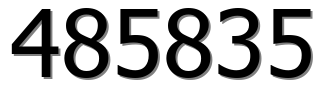
Take your guess
Caches in the Series
 Game #1: Randomonium
Game #2: Tic Tac Toe
Game #3: Hangman
Game #4: Connect 4
Game #5: Master Mind
Game #6: Battleship
Game #7: Minesweeper
Game #8: Break the Safe
|
Unique |
Total |
| Wrong Guess: |
 |
 |
| Correct Guess: |
 |
 |
| This Page: |
 |
 |